Reconnecting with Nature and transforming the campus, all in a weekend
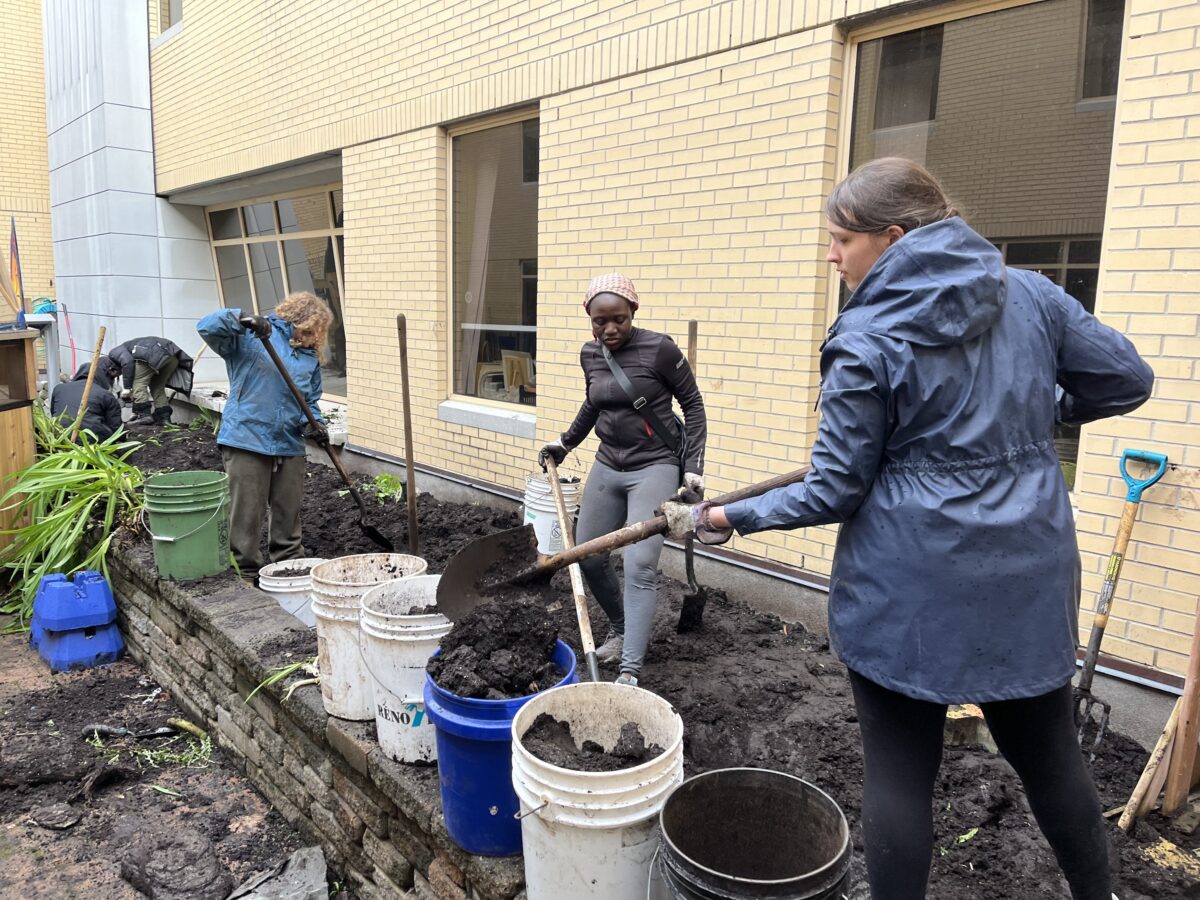
Two classes of Dawson College students spent an intense weekend on campus May 2–3, getting dirty, sweaty, and wet as they lifted and moved tonnes of soil and took on a variety of physically demanding tasks. In just two days, they transformed several areas of the campus – and themselves. The students were part of two Eco-Landscaping Physical Education course sections taught by Angela Corinthios and Paul Wasacz.
The objective of the course “is to demonstrate that physical activity can take many forms and that many dimensions of wellness can be developed by participating in various activities, like gardening,” Paul said.
“We were one big working unit,” said Angela, who taught this course for the first time this semester. “We were figuring things out and learning together.” The two classes worked on distinct but related Living Campus projects with support from the Office of Sustainability.
Students moved approximately 20 tonnes of sand, soil, and gravel—entirely by hand—to build a second Dawson Wetland system designed to capture rooftop rainwater and return it to the environment in a cleaner state. Jennifer de Vera from the Office of Sustainability explained that the project includes over 250 native Quebec plants and contributes to reducing greenhouse gas emissions while creating habitats for local wildlife.
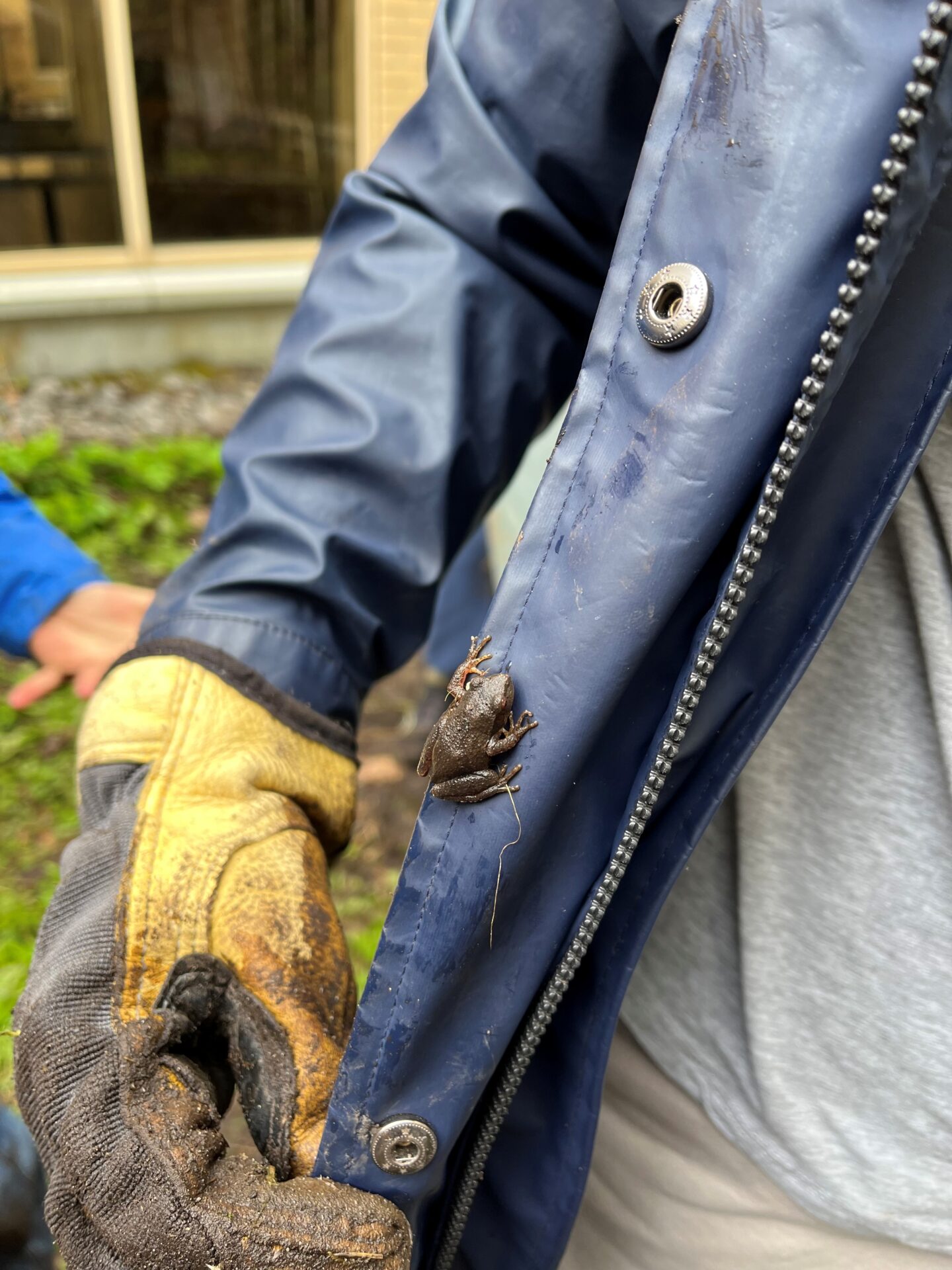
Another group cleared two rooftop courtyard gardens (visible from Conrod’s student space in 2F.4) in preparation for upcoming renovations. They carefully relocated plants, moss, nurse logs, peeper frogs, trees, insect hotels, and soil to new areas on campus, including the Micro Forest, the new bioretention wall, and the Peace Garden.
Even over just two days, the experience had a strong impact on student Antonia Velasquez Vargas: “It completely opened my eyes in ways I didn’t think possible. Before the intensive, I had never even thought about the school’s water management system, and I didn’t pay much attention to the gardens at Dawson. After this amazing experience, I started paying more attention to the beautiful green spaces available at the college, while also developing a new interest in sustainable urban design and environmental projects in the city.”
“I think this experience taught me many different and incredibly valuable things. My teamwork skills improved, and my relationship with Nature also became much stronger and healthier.”
Student Antonia worked on the bioretention system, contributing to tasks such as shoveling gravel and soil, transporting materials, building the base structure, planting, and cleaning up.
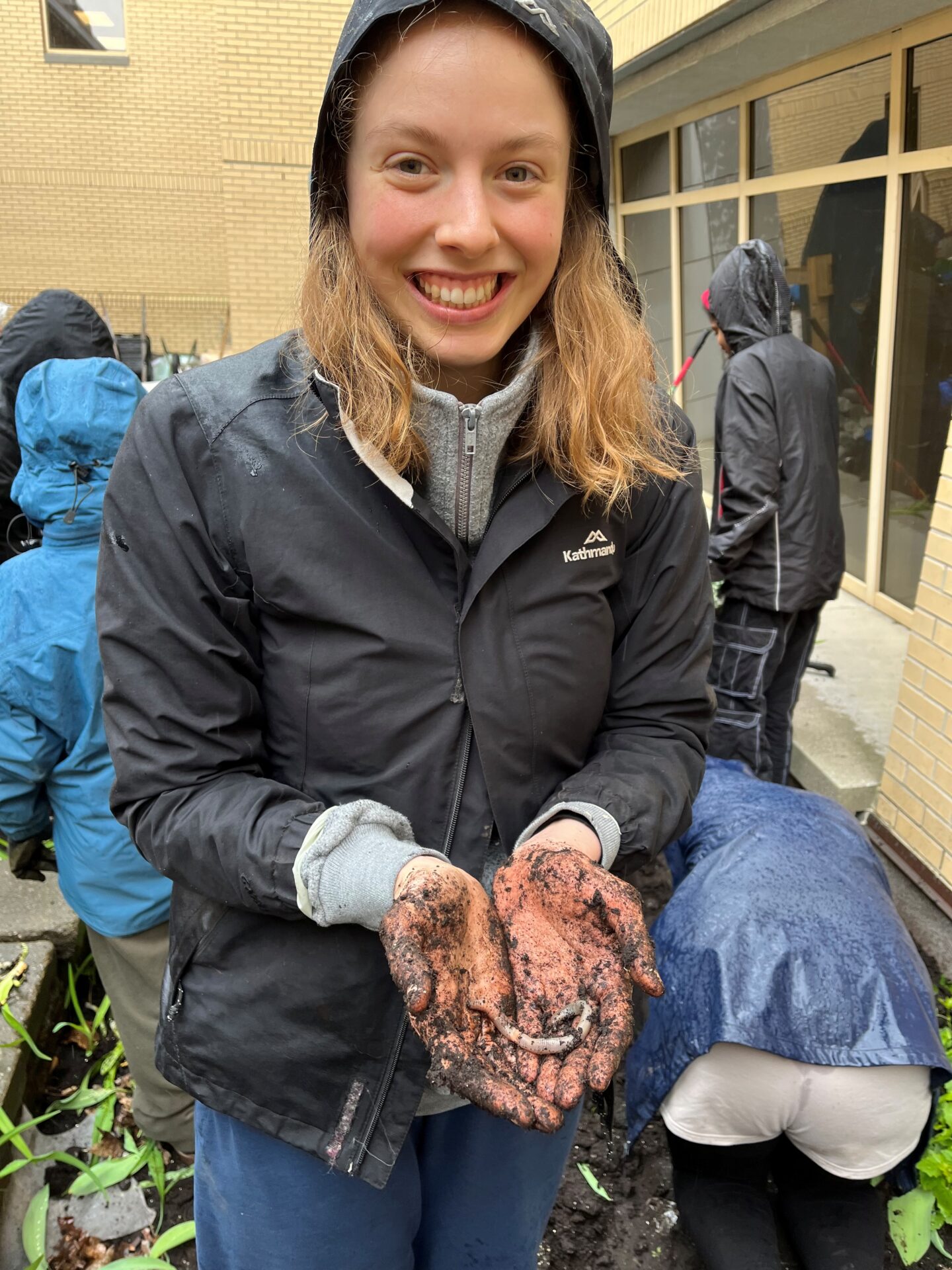
Angela accompanied the rooftop garden group. “Within a very short amount of time, the students were on all fours, hands in earth, working together in small groups, gently digging out pear trees and apple trees and peach trees and red Osier Dogwood trees, taking care to not injure any roots.”
“Even though at times there weren’t enough buckets or trolleys to keep the work rolling, the students would ask “what can I do next?” Not once did I hear a complaint. All I heard was students asking fellow students, “Can I help?”
Student Élodie Sinclair shared this reflection: “There has been a curious shift in the way I view my environmental surroundings, a sort of incorporation of green spaces in my immediate awareness as well as in my universe. On one hand, I now notice every individual plant in a patch. The fauna and flora around me also catch my eye much more.”
“Although I absolutely love plants and the environment and love to see them everywhere, there used to be an unconscious cleft between them and me, a bit like the abstract frontier that is between most people and the underwater world. Seemingly, the fact that I had not been in such close and prolonged contact with landscaping had created this disconnection. This was mended when I was, in a way, tangibly breaking the surface of the soil – by taking plants out and putting others in – which opened the door for me into this world.”
“Additionally, I also am a lot more hopeful and informed than I was before about making the city eco-friendlier, which I am quite desperate for! Aside from the magical sensations mentioned above of noticing more of Nature around me and knowing that I can take part in helping it thrive, this experience also gifted me with an incredibly pleasant (and lasting!!) mixture of happiness, peace, giddiness, togetherness, fulfillment, and seeing the beauty in everything. Furthermore, I gained considerable knowledge, mostly practical, like how to execute the transplanting and pruning of plants, create a microhabitat, the best ways to pick things up for the sake of our backs, etc.”
Student Sara Boulaar was amazed by how quickly the bioretention wall project came together. “I learned that with a few people who are ready to make a difference, we can accomplish great things,” she said. “It was a pleasure to be part of such a fulfilling project. By the end of those two days, I finally understood the feeling of reciprocity that (teacher) Paul had been talking to us about. This experience also taught me that environmental projects require cooperation, since every small task contributes to the final result. Overall, I would say that it was such an honour to be able to make a small but significant contribution to the world.”
Student Teshiyah Vernon-Cockburn reflected on her experience working on the rooftop gardens: “When we started taking apart the garden, I was surprised by how attached I felt to it. Some of the plants and trees had been there for years. Removing them made me realize how connected I had become to the garden space without even noticing. I didn’t expect to feel that way.”
“As we were moving soil and relocating plants I thought about how this place has changed a lot over time. This place was once a forest then it was the land of the Kanien’kehá:ka then it was a nunnery and now it is our school. I realized that we were adding yet another layer to the history of this place. This made me feel a real responsibility to treat the land with respect. The bioretention wall was a way of giving something back. It’s a system that will help clean the water and support the environment long after we are gone. Working on the bioretention wall made me see that reciprocity is not an idea, it is something that you do: recognizing what the land has given us and choosing to give something to the land in return.”
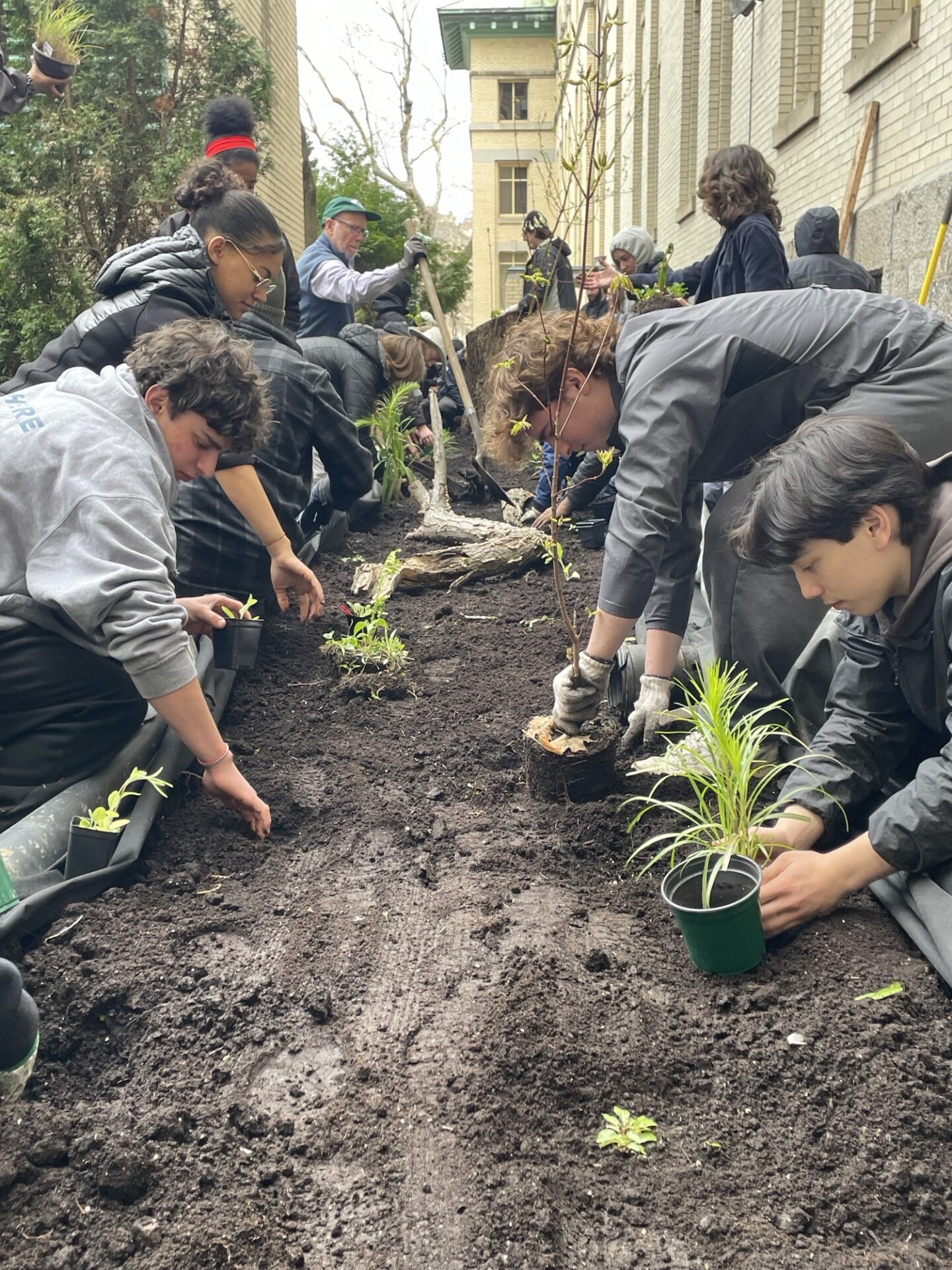
Teacher Paul Wasacz, who has taught the course several times, was delighted to see “students be unbelievably physically active while socializing, laughing, and improving well-being for all on our campus block.”
“This course asks students to think about physical education and wellness from a completely different and unique perspective. It allows them to be active in a way where they feel they are making a difference and creating a change in a world they want to impact so badly. It is an amazing outlet and pathway to achieving fitness and an overall sense of meaningful accomplishment.”
“When students build, create, and enhance natural spaces on campus, it gives them a sense of pride and ownership,” said Jennifer de Vera. “The students not only strengthen their environmental awareness and responsibility, but they also increase their sense of care for the species on our Living Campus. Well-being for ALL includes the non-human world as well.”
“Emptying out the courtyards (rooftop gardens off Conrod’s in 2F.4) showed the students how we repurpose and reuse materials on campus instead of adding to the landfills. This class highlighted our Living Campus motto of reconnecting people, community and Nature.”
Special thanks to volunteers Chris Adam and Narcisse Waiel Hassan who were there all weekend with Jenn de Vera, Angela Corinthios, Paul Wasacz and the students.