Dawson’s Pat Romano and Kim Simard recognized as Teachers Building Leaders
Every so often, an educator’s influence reaches far beyond the classroom: shaping how students see themselves, the choices they make, and the kind of impact they hope to have on the world.
The Teachers Building Leaders Award presented by the Loran Foundation and the McCall MacBain Foundation recognizes outstanding educators across Canada whose dedication to their students has done exactly that. Nominated by a Loran Scholar, the award celebrates teachers who provided early inspiration, guidance, and opportunities for growth often at pivotal moments in a young person’s life.
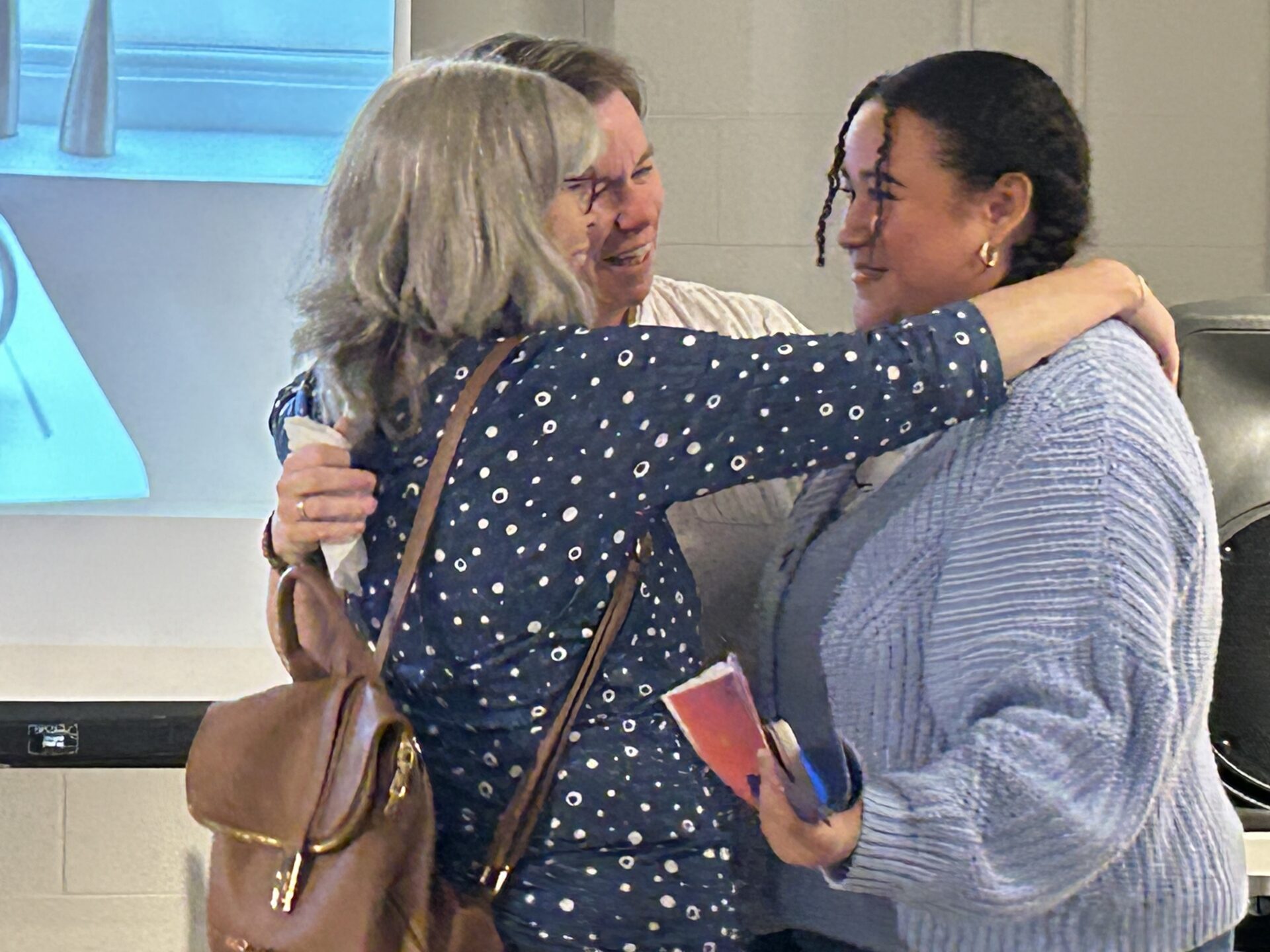
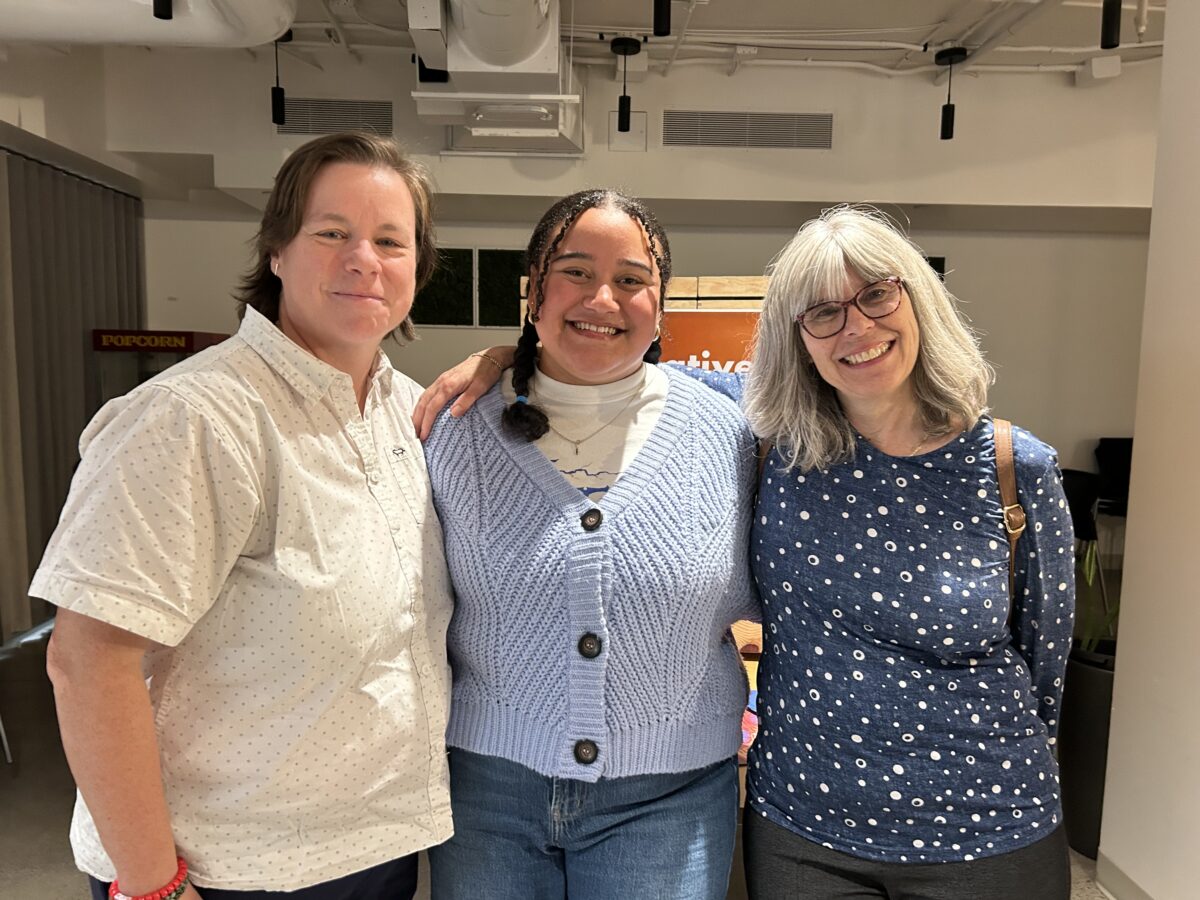
This year, two Dawson teachers share that distinction: Humanities teacher Patricia (Pat) Romano and Cinema l Communications teacher Kim Simard have been selected as co-recipients of the award.
Pat has been teaching at Dawson since 1991, and Kim joined the College in 2008. Their joint recognition speaks not only to the gratitude of their former student, Mariana Cueto Mendoza, but also to the lasting impact of great teaching. A 2023 Dawson graduate from the Law, Society and Justice profile of Social Science, Loran Scholar and current law student at Université de Montréal, Mariana nominated Pat and Kim together in recognition of the difference they have made in her life, a testament to how great teaching can resonate long after a course has ended.
The Communications Office interviewed Pat and Kim. Here is the Q & A:
What does this recognition mean to you personally and professionally?
Kim: Personally, it connects to the meaningful impact you always hope to have with students. It validates that I was able to connect with students beyond the course content.
Professionally, this recognition is humbling. There was no question in my mind that working collaboratively in an interdisciplinary way would open up new avenues as a teacher, this unexpected acknowledgement that it is working makes all the extra effort worth it!
Pat: I am really honoured and feeling so privileged. The most special moments in a long career are often when you accidently bump into a student from years past, and they go out of their way to tell you that they still remember your class. So, having this expressed through an official recognition is incredible and the fact that this recognition is coming near the end of my teaching career makes it even more special.
What do you see as your role in helping students develop as leaders?
Kim: I think helping students develop the courage to express themselves with authenticity and to never underestimate the power of creativity in the face of complex challenges.
Pat: I am not sure I really think of helping students become leaders, but rather of supporting their development into thoughtful, responsible and caring individuals, who recognize that, regardless of how overwhelming the world is, their choices matter and can make a difference. I always hope that I have left my students more critical of power, but more trusting of their fellow humans.
Can you share an example of how you encourage students to take initiative, pursue opportunities, or build confidence?
Kim: By making the classroom safe, students can explore without judgement. We learn a lot by trying, and that is what I try to encourage most. The creative process is a vulnerable one, my role is a cheerleader most of the time. I truly believe in the creative visions shared in class. I say yes a lot, and let’s figure out the details later. Confidence comes when they see the work reflected back, eventually trusting in the process.
Pat: I think what was unexpected when Kim and I began teaching together was the extent to which a pedagogy that engages students intellectually, emotionally and creatively – all at the same time – can be transformative. It is difficult for any teacher to do this meaningfully in any single course, but when we paired my rather content-heavy course with Kim’s creative, more hands-on course, we saw our students grow in ways that neither of us had seen before.
Looking back over your teaching career, what have students taught you?
Kim: Students are a constant source for learning. I continue to learn that our capacity to understand one another can come from the simplest of things. A common song, a collective laugh, a willingness to give space for the unexpected. We are so fortunate to exchange with one another in these ways. Students teach me that we need each other to grow. When I show up with honesty and commitment, often students do the same.
Pat: Kim’s response is perfect! Perhaps, I can add that I have come to see that we should never put any of our students into boxes or categories or think we know how or why they think in a certain way.
What qualities do you hope students leave your classroom with, beyond academic knowledge?
Kim: Compassion, empathy, a sense of empowerment and a connection to the dormant creativity within.
Pat: I would echo Kim’s qualities, perhaps adding that I hope I foster the qualities and knowledge that help students develop the courage and sense of self-awareness to resist societal pressures and to stay true to themselves when things don’t feel right
What do you remember about Mariana Cueto Mendoza as a student here at Dawson?
Kim: Marianna was a student with a lot of drive, passion, and commitment. All the things that we did in class I worried were too challenging; Marianna would take them on with endless curiosity. She was a leader in the class for sure, finding ways to collaborate, showing incredible confidence in herself, and inspiring others.
Pat: Mari was one of those students that a teacher never forgets. Actually, I still remember the first essay she wrote! I couldn’t agree more with Kim but would add thoughtfulness and compassion to the list. The Loran committee chose the perfect candidate.
What is unique about the Dawson environment when it comes to helping students become engaged citizens and leaders?
Kim: Dawson is a place where students can find themselves. There seems to be lots of ways students can explore their interests and navigate their education. We are developing critical thinking, well-rounded humans, or at least I hope we are!
Pat: I think at Dawson we really take the idea of teaching the whole student to heart – and this commitment was only strengthened by the events of 20 years ago.
What does leadership mean to you?
Kim: I used to think leadership was taking the reins and holding on tight. Now I think leadership is being there, listening, providing opportunity for development and collaboration, and modeling what can be.
Pat: I agree – and would add that leadership requires a sense of curiosity, a constant desire to learn, and a willingness to admit when one is wrong.
Was there a special teacher in your life who inspires your teaching? Tell me about them and their impact on you.
Kim: Mr. Phendler taught music at Sunnyside Elementary in the Eastern Townships. When he noticed I had an ear for music, he took it upon himself to lend me a guitar and take time from his lunch hour to teach me how to play. His generosity, kindness, and attention made me feel seen. Like me, he wanted students to know they are capable of great things!
Pat: LOL – my student days were a very long time ago. I think that as I have gone through my career, what has inspired me towards interdisciplinarity and exploring – regardless of the topic, the complexities and contributions of ordinary people – is what was missing in my college and university education.
Anything else you would like to say?
Kim: This collaboration between Pat and I would not have been possible without the support of Women’s/Gender Studies, the former Peace Center, the incredible Cinema | Communications department, Ian MacKenzie (Learning Communities founder), and most recently Julia Lijeron (OAD) and the Dawson College Foundation.
Pat: I think this award is testimony to the power of team-teaching, Mari mentioned to us how she was told that she could only recommend an individual teacher and would need to split up Kim and I. She answered that she could not do this and that they would understand why not when they read her recommendation. This says it all – so a huge thank you to Ian and everyone at Dawson who have given their support to the Learning Communities initiative.