Learning solidarity beyond the classroom
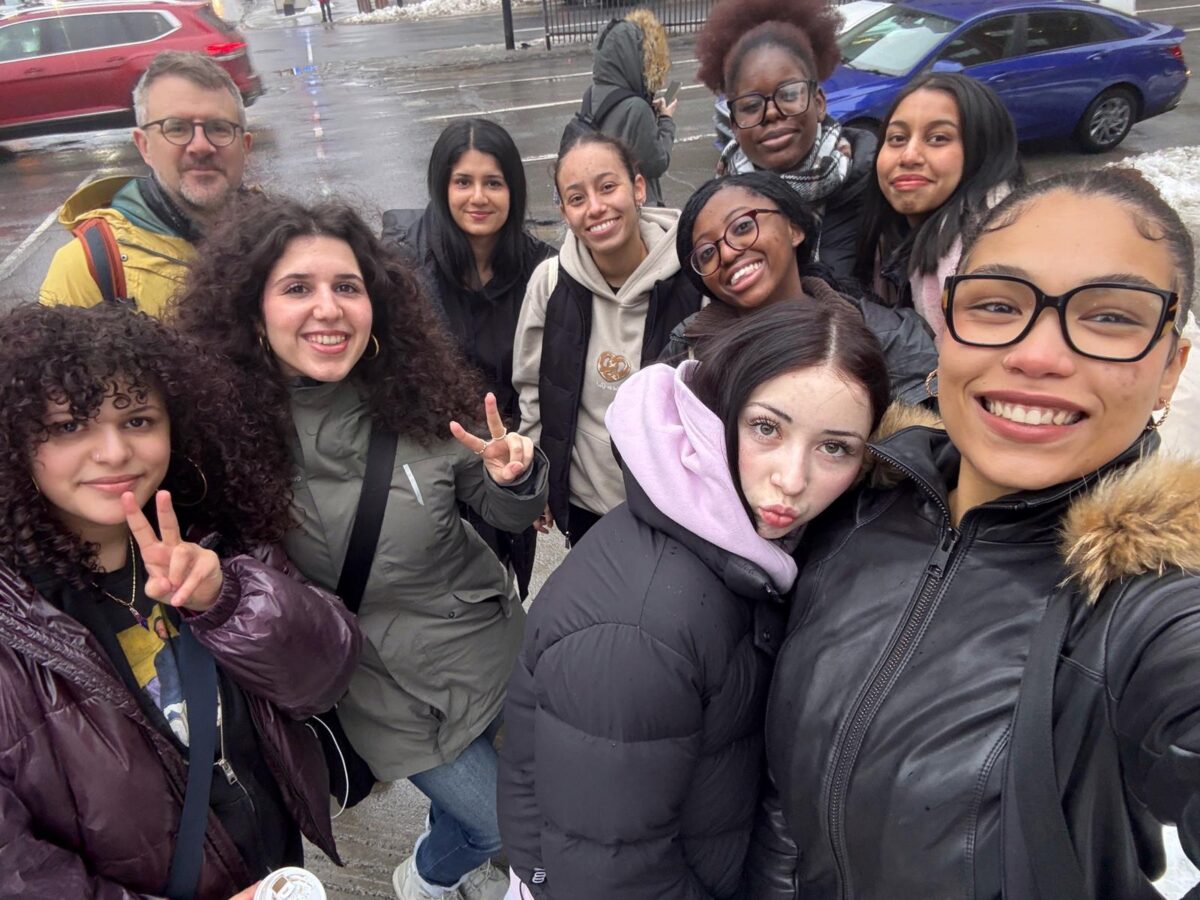
This semester, I was part of a group of approximately 25 students in my class Solidarity in Action: A Local Perspective, who participated in an intensive learning experience focused on migrant justice in Montréal.
Over several days, we stepped outside the classroom and met with community organizations including the Immigrant Work Centre (IWC), Jia Foundation, Refugee Centre, Welcome Collective, and Solidarity Across Borders (SAB). The goal of the course is not just to learn definitions and theories about migration, borders, and justice, but to connect those ideas to real people, real stories, and real struggles happening in our own city.
In our Thematic Issues class in the Fall, we learned about migrant justice, detention centres, and how systems of control affect people who move across borders, specifically people with precarious status. At first, everything felt manageable. We discussed policies, human rights, and solidarity in a theoretical way. It felt important yet distant; however, that changed when we met the organizations and people who live in these realities every day. Suddenly, the issues were no longer abstract. They had faces, voices, and emotions attached to them.
One of the most difficult things for me to process was learning about immigration detention centres in Canada. I was shocked to learn that children can be held in these centres and that people who have committed no real crime can be handcuffed and detained.
When I say “no real crime” I mean they have not hurt anyone; they just do not have the papers this country wants. The image of a child behind bars felt unreal to me. These were the kinds of stories I associated with history books and faraway countries but to realize that this was happening near where I live made me feel physically sick. It forced me to confront the gap between the values Canada claims to uphold and what is happening behind closed doors.
We met members of Solidarity Across Borders, who went on a hunger strike for nine days, to protest after a six-month-old baby was brought into a detention centre in Laval. Because of their collective action and legal work, the baby and their mother were eventually released. This story changed the way I think about activism. It showed me that solidarity is not just a word – it is action, risk, and persistence.
Visiting the Welcome Collective was another powerful experience. The warehouse was filled with donated clothes, toys, books, furniture, and necessities for newcomers in Montréal. Seeing that level of community care was moving. At the same time, it raised painful questions for me. What is the point of all these resources if some children are in detention centres instead of being able to use them? How can we talk about protecting children’s futures while allowing their childhoods to be taken from them?
What affected me even more was learning what happens to people with “no status” when they get sick. Many avoid hospitals because they fear being reported or detained. Even when they do go, they can be denied care or face medical bills so high that even citizens and people with legal status struggle to afford. This means people suffer, delay treatment, and sometimes die—not because their condition was untreatable, but because they didn’t have the “right” papers.
This experience forced me to ask a question I cannot ignore: are we willing to let a piece of paper replace our humanity? Is it acceptable to allow someone to die because of their immigration status? When basic medical care becomes conditional, human life becomes conditional too.
— By Prabhleen Kaur Bhatti
Solidarity in Action: A Local Perspective is organized by the Social Change & Solidarity profile of Social Science, in parallel to the Field Trip to Cuba (Solidarity in Action: A Global Perspective).