Moving from failure to friction
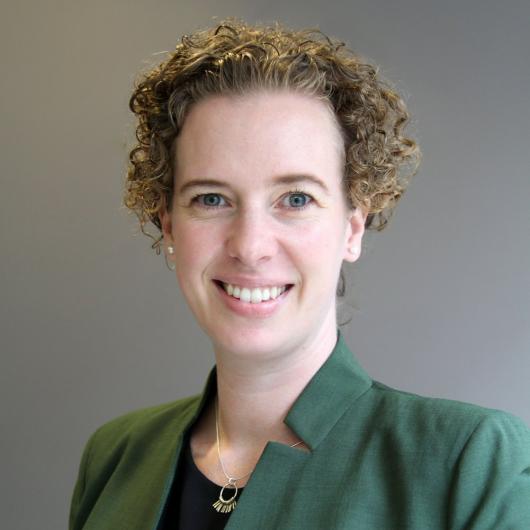
Dr. Fiona Rawle encouraged Dawson faculty to shift the conversation from “failure” to “friction” during her keynote address, The Science of Learning from Failure, at Dawson’s Fall Ped Day on Sept. 24.
The word failure often carries feelings of disappointment, anxiety and hopelessness, noted Fiona, who holds a PhD in Pathology and Molecular Medicine and is Associate Dean, Pedagogical Development and Scholarship at the University of Toronto Mississauga and a Professor in the Department of Biology.
Research suggests that learning frequently happens through struggle, uncertainty and mistakes. “We know through cognitive science that we learn well from failure, if it’s supportive. But we don’t usually teach students how to fail and how to learn from failure, and we don’t teach colleagues how to do that,” she said.
Fiona encouraged teachers to see failure as part of an ongoing learning process.
“Students don’t like the word failure,” she said. Instead, she advocated using the term friction to describe the productive challenges students encounter when grappling with new ideas and concepts.
Fiona illustrated this idea with quotes about failure from two very different figures: Rihanna and Thomas Edison. “Thomas Edison has an often-misquoted quote, but it’s some version of: ‘I haven’t failed. I just found 10,000 ways that didn’t work.’ It talks about failure as a process of learning. Rihanna has a tattoo on her clavicle that says: ‘Never a failure, always a lesson.’ And that’s a phrase that really resonates with our students,” she said.
Fiona linked students’ fear of failure to broader realities facing today’s learners. Many students report being more exhausted and stressed than previous generations, navigating a poly crisis that includes social media pressures, the lingering impacts of the pandemic, climate anxiety and geopolitical uncertainty.
A key message of the presentation was that innovation and discovery often emerge from mistakes. Fiona shared examples of accidental inventions, including the pacemaker and the drug Viagra, adding that openness to risk and experimentation can lead to unexpected breakthroughs.
She also highlighted research showing that early setbacks can sometimes lead to long-term success. Fiona gave the example of researchers who narrowly missed receiving an early-career grant. “When they follow these people throughout their careers, the folks who just missed that early-career research grant did better long term,” she said. “They got more grants later on, and they published more papers.”
However, she cautioned against simplistic messages that celebrate failure without acknowledging that not everyone has the same support or safety nets. “You can share your failures, learn from failure, take risks, but you only can do that if you have a safety net,” she said. Students from underrepresented, first-generation or financially constrained backgrounds may experience risk and failure very differently.
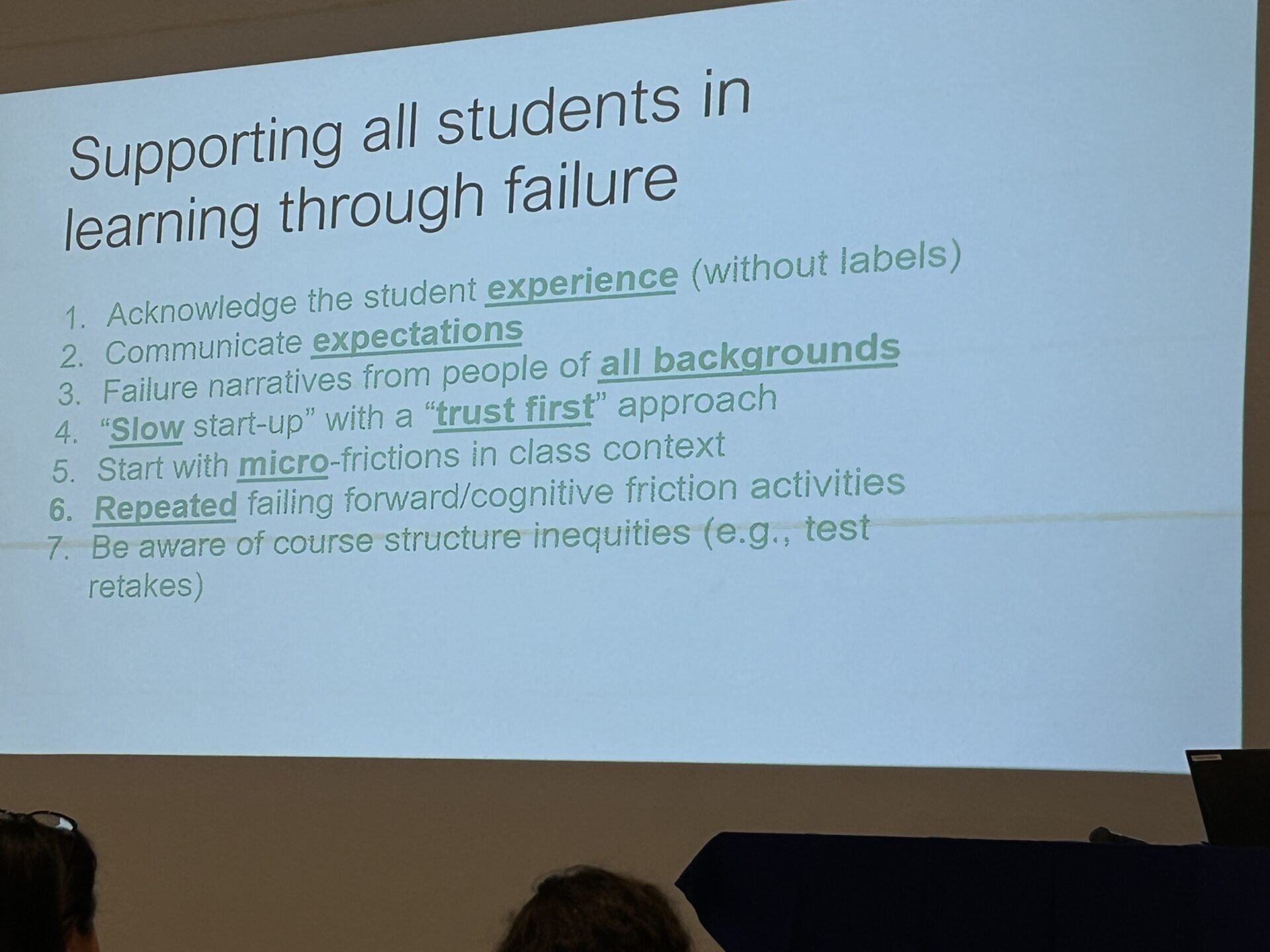
One practical strategy she promoted was helping students engage more quickly with difficult questions. She led participants through a few exercises demonstrating how this can be done in the classroom. Rather than avoiding uncertainty, students should be encouraged to wrestle with challenging problems, misconceptions and knowledge gaps. These moments of “cognitive friction,” she said, often lead to deeper understanding and stronger learning.
To reduce the fear of failure, she suggested lowering the stakes and increasing opportunities for feedback and growth. Examples include:
- credit for effort and participation
- repeated assignments with the lowest grade dropped
- opportunities for revision
- incorporating works in progress and revisions into grading
Throughout the presentation, she emphasized the importance of creating supportive learning environments where students can discuss mistakes openly, learn from one another and view setbacks as opportunities for growth rather than evidence of personal shortcomings.
Her key message was simple: while education often focuses on the final product, students benefit most when educators help them value the process. “The process is the point,” she said.
Resources from Dr. Fiona Rawle, including an example bank of learning from failure across the disciplines and other materials from Fall 2026 Ped Day are here on the Office of Academic Development SharePoint site.