Social Service teacher recognized for her transformative impact on the program
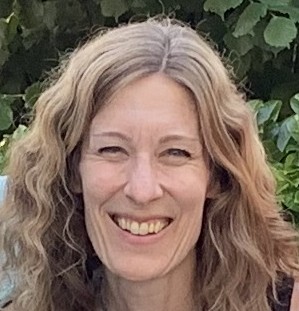
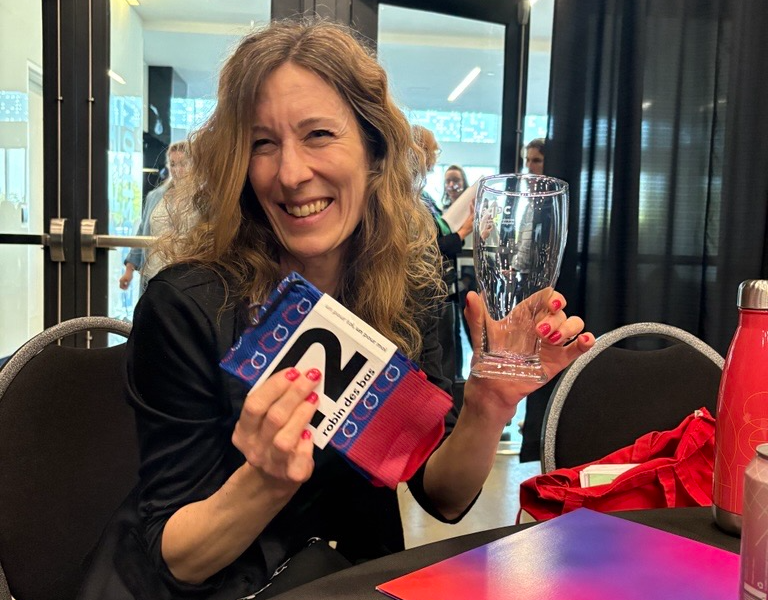
For her exceptional contributions to Dawson College’s Social Service program and her commitment to student success, faculty member Marie-Eve Dufour received a mention d’honneur from the Association québécoise de pédagogie collégiale (AQPC) at its annual conference in May.
“Leadership, generosity and an unwavering commitment to student success make Marie-Eve a truly deserving recipient of this recognition,” said Azra Khan of the Office of Academic Development.
Over the years, Marie-Eve has helped lead curriculum renewal, mentored new faculty members and supported colleagues in developing new courses. She has also worked to strengthen students’ preparation for field placements through workshops developed with Dawson’s Centre de langue écrite et orale (CLÉO). In collaboration with Dawson’s Interprofessional Education (IPE) group, she co-developed a resilience workshop for third-year Nursing and Social Service students.
Marie-Eve recently participated in a Q & A with Dawson’s Communications Office.
What does it mean to you to receive a mention d’honneur as a Social Service teacher at Dawson?
Marie-Eve Dufour: It represents recognition and validation of the intentional work that goes into designing, developing, and delivering high-quality courses and providing students with optimal learning opportunities throughout their journey in the Social Service program.
Is there a student comment, project or experience that has stayed with you over the years?
Marie-Eve Dufour: What continuously strikes me is the tremendous growth, both personal and professional, our students are capable of as they progress in the Social Service program and engage in practice experiences in the field.
The innovative community action projects our students have co-developed and implemented over the years have also been a great source of inspiration.
What is a moment in your teaching career that made you particularly proud?
Marie-Eve Dufour: I have experienced several rewarding moments thus far in my teaching career, such as working on course design for the implementation of our new program, co-developing and delivering discipline-specific French workshops with my peers in collaboration with the French department, and being involved in the promotion and implementation of interprofessional education (IPE) activities for students in our health and social service programs.
I am particularly proud of a co-teaching experience I had with my colleague Cindy Mitchell last fall. We collaborated closely on developing the content, learning activities, and assessments for our new Family Assessment course, drawing from our respective experiences in the field and pooling our individual strengths to provide students with the most optimal learning experience. We also joined our classes together on a number of occasions which allowed students to hear and consider different perspectives and practice examples.
How do you create a supportive classroom environment?
Marie-Eve Dufour: A supportive classroom environment starts with investing in relationship-building with students. It is important for me to listen and learn about students’ needs, goals, interests and strengths. My wish is to develop a partnership with them where their own knowledge and experiences become part of the learning that takes place in the classroom. It is also about being approachable, fostering open communication, taking risks, humbling oneself and admitting one’s own mistakes to help alleviate some of the pressure students may feel as they enter a new learning situation.
Tell us about how you help welcome new faculty, provide mentoring to them and why this matters to you.
Marie-Eve Dufour: It is part of our culture in the Social Service department to provide support and guidance to new faculty members. For myself, I try to welcome new teachers with the same openness and generosity I was greeted with when I first started teaching 15 years ago. I recall what a steep learning curve it was for me to move from being a Social Worker in the field to teaching college-level courses and preparing students to enter a career as Social Service Technicians. I believe no teacher should ever be working in a silo or feel isolated in their role.
My colleagues and I are available to each other, listen to and normalize any concerns or needs our fellow teachers may have, and share material and resources along with our own teaching experiences.
Our department fosters a collaborative approach, where each faculty member is encouraged to bring their unique strengths, knowledge and experience to benefit students’ learning.
What keeps you motivated?
Marie-Eve Dufour: Witnessing students’ growth every semester is a strong motivator for me as a teacher. I also thrive on ongoing professional development and exposing myself to opportunities to collaborate, learn with and from others, and critically reflect on pedagogy and teaching practices. As is true of working in the field of Social Service, teaching is a humbling and highly stimulating experience.
Is there anyone you would you like to acknowledge or thank for supporting your work?
Marie-Eve Dufour: All of the projects and initiatives I have been involved in or tasked with over the years have evolved or come to fruition thanks to close collaboration and consultation with fellow teachers, programs, departments, the Office of Academic Development, communities of practice, Science, Medical Studies and Engineering (SMSE) Sector Deans, and community partners. I am grateful for the confidence and trust placed in me, as well as the support (both logistical and pedagogical) provided to allow me to fully engage in new projects while maintaining my teaching role.
I would specifically like to thank my Chairs and colleagues and our Sector Deans for their support and commitment to our program revision and implementation process. I would also like to express my gratitude to Tannia Ditchburn, Jane Hudson and Einat Idan for their expertise and guidance with course design, Isabelle Carrier for creating opportunities for pedagogical innovation through Faculty Working Groups, Krista Bulow for her leadership and dedication to Interprofessional Education at Dawson, and Laëtitia Desanti (Programme d’ateliers en français –PAF) for sharing her deep knowledge and mobilizing resources to help our students develop their French communication skills in the field.
Anything else you would like to say?
Marie-Eve Dufour: I would like to acknowledge all the “behind-the-scenes” work my colleagues undertake to provide students with the most meaningful, lasting learning experiences and practice opportunities. I also wish to highlight our Social Service students’ remarkable dedication and commitment to their training.