Solidarity in action: a privileged perspective
“The speakers in front of us were talking about exclusion, fear and vulnerability. We sat in the room as privileged students, protected by the same system that had failed them.”
This realization emerged during the four-day intensive Solidarity in Action: A Local Perspective (January 13–16), where, alongside our teacher Ben Lander, we met immigrants, refugee claimants, and representatives from non-profit organizations across Montreal. The class took the form of workshops and panel discussions, where speakers shared the realities of navigating a system that often works against them, encountering barriers in nearly every sphere of their daily lives.
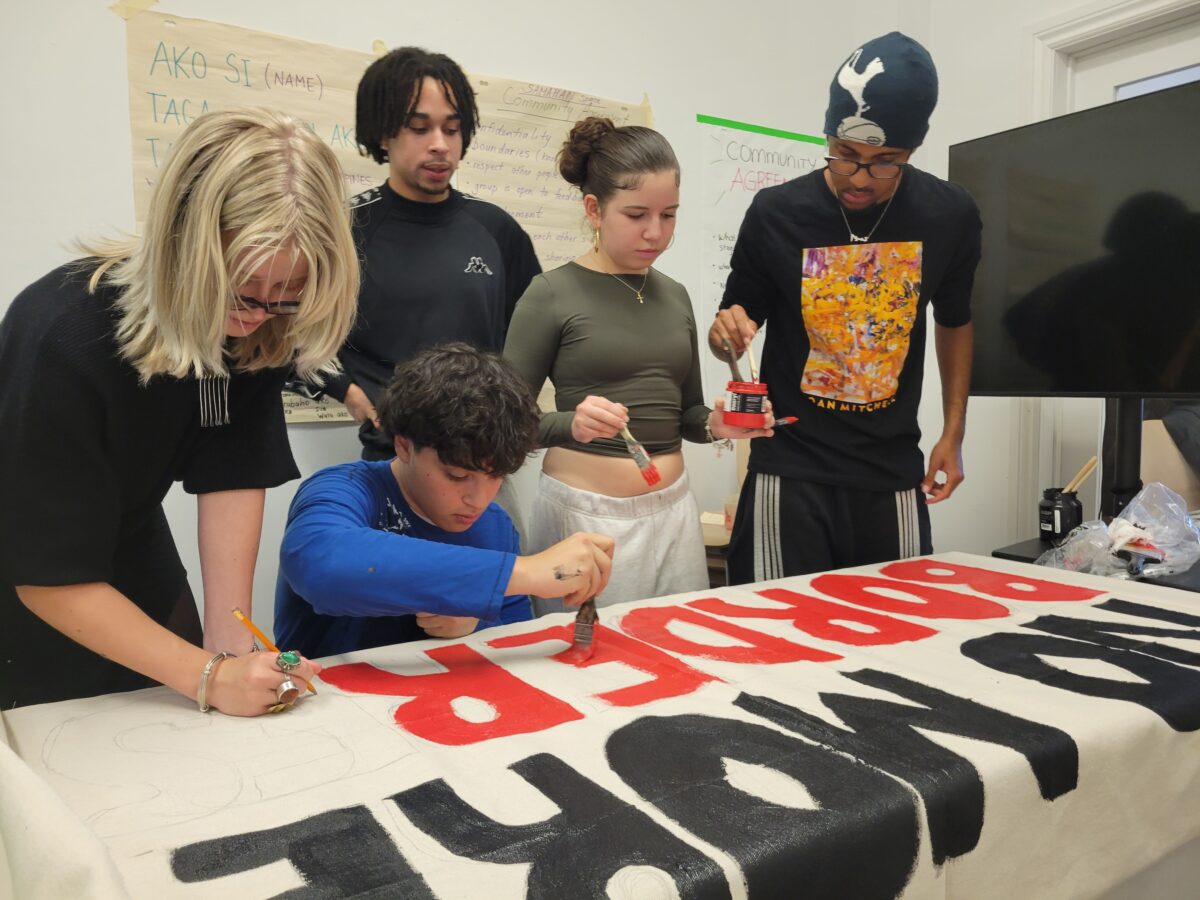
Over the week, we visited five organizations: the Immigrant Workers Centre (IWC), JIA Foundation, the Refugee Centre, the Welcome Collective, and Solidarity Across Borders (SAB). Topics ranged from Bill C-12 and its implications, to gentrification in Chinatown, to the intersection of immigration and the law. We also heard from members of SAB, a network whose mission, through political mobilization and popular education, is to raise awareness and fight against what they describe as an unjust and unethical refugee system.
While the meaning of solidarity can vary depending on context, I came to understand it not as sharing the same hardships or experiences, but as being united by a desire to create change. During the intensive, our role was to listen, to engage thoughtfully, and to offer our attention to those whom the system refuses to acknowledge. In that sense, simply giving our ears became an act of solidarity in itself.
One recurring concern raised by several organizations, including the Immigrant Workers Centre, the Refugee Centre, and the Welcome Collective, was Bill C-12, currently in the process of becoming law. Officially titled the Strengthening of Canada’s Immigration System and Borders Act, this bill would grant broad discretionary power to the Minister of Citizenship and Immigration to alter or revoke immigrants’ status. Some speakers drew parallels with the United States, suggesting that although Canada presents itself as more moderate, it risks following a similar path. A path where xenophobia is rooted in structural systems shaped by colonialism, neo-colonialism, and capitalism.
In Chinatown, a sanctuary of history, legacy, wisdom, and culture for Asian communities, we learned about demographic decline and the loss of green spaces, making the preservation of cultural heritage increasingly difficult. Youth-led organizations such as Chinatown Youth to Quartier Chinois Resistance are actively interlinking issues and raising awareness. The COVID-19 pandemic further intensified racism and discrimination, compounding existing challenges.
The testimonies shared by members of SAB were the emotional peak of the intensive. We heard stories of harm, of governmental neglect, of being reduced to a file, stripped of feelings, history, and identity. Many had sacrificed what they once called “home,” leaving behind comfort and familiarity to come to a country that still refuses to fully recognize them, even after years of living here.
One SAB member shared her friend’s experience: after coming to Canada, she was diagnosed with cancer but did not have RAMQ coverage. Medical bills accumulated, treatment was delayed, the cancer spread, and she passed away months later. No legal procedure followed; the file was closed. To this day, the unpaid balance remains in the system. While this example exposed failures within healthcare, other refugee claimants described living under false identities, constantly hiding their real selves to survive. In some cases, they spoke of gradually sinking into those constructed identities, almost creating and living in an illusion. They are often portrayed as “abusers” of a system that, in reality, excludes them from education, healthcare, and employment.
Experiencing—or rather, hearing—this intensive from a privileged and protected perspective did not feel comforting. It felt unsettling, almost guilty. We could listen, take notes, thank the speakers, and walk away. They could not. Sitting in that panel discussion felt less like attending a lecture and more like being handed an assignment. Their lives, the harm they endure, the injustices they navigate were the instructions. The responsibility to respond became ours to complete.
What will we turn in?
-Submitted by student Lina Haouam
Solidarity in Action: A Local Perspective is organized by the Social Change & Solidarity profile, in parallel to the Field Trip to Cuba (Solidarity in Action: A Global Perspective).