Faculty Learning Community connects students with independent journalism
Journalism isn’t always boring. In fact, it can feel like a game of cops and robbers. That’s what ALC students discovered during a recent visit from Chris Curtis, founder of Montreal’s The Rover. The talk was organized through a Faculty Learning Community (FLC) on journalism and media literacy, which brings together faculty and others from across disciplines to develop tools and approaches for teaching media literacy in the classroom.
With over 37,000 Instagram followers, Chris has become known for condensing complex local issues into accessible reels, offering an alternative to mainstream media and meeting audiences where they already are. The approach resonated strongly with students.
“In the FLC, we’ve been discussing how mainstream and legacy media often doesn’t resonate with students anymore,” says Michael Filtz, Cinema | Communications faculty member who facilitates the FLC. “They’re much more engaged with local, independent outlets.”
The FLC arranged for Chris, a Cin | Com alumnus and former contributor to The Plant, to speak directly to students in the ALC program last month. Faculty combined two courses — Journalism and the Web and Journalism: Writing Feature Stories — to connect classroom concepts to real-world practice.
“As hard as journalism is right now, it’s also exciting,” Chris told students. “We’re fighting to change the way journalism is made, champion diverse voices, cause trouble — and we’re having a pretty good time doing it. It’s like playing cops and robbers.”
Rethinking journalism for today’s audience
Chris spoke candidly about the realities of running an independent publication, from editorial decisions to financial sustainability, as well as the importance of meeting audiences where they are.
“For a while I was a snob about it,” he said. “Most people won’t read 8,000 words. Now, if Instagram is the only thing they see, I have three minutes to give them something valuable. If that involves a little razzle-dazzle, that’s okay. It’s made us relevant to a larger audience — and it’s keeping us alive financially.”
For faculty, the visit highlighted the value of connecting students directly with working professionals.
Chris “encouraged journalism students to be curious and establish a rapport with people. He then took his own advice by energetically asking students about themselves and fielding questions,” said Sarah Gilbert, English faculty member and instructor of Journalism: Writing Feature Stories.
“It was interesting for students to hear about the challenges of running an independent media site and to learn that he got his start as a contributor to The Plant over 20 years ago.”
Sarah also noted the broader impact of the FLC on her teaching. “Being able to discuss the changing media landscape with faculty has helped me engage students in a dynamic discussion of these shifts.”
From theory to practice: students engage with journalism
Students responded enthusiastically to Chris’ advice and openness. Valentina Lipmann, a Literature student, noted his emphasis on the time and commitment required for strong journalism. She observed that producing meaningful work requires being “all in.”
Alessandra Mercuri, a student in Journalism and the Web, pointed to his approach to social media as a strength. “People are addicted to scrolling, myself included. You may as well use the platform to educate instead of placate,” she said. Inspired by The Rover’s style, she added that she hopes to pursue a career that is both honest and engaging: “If I can inform people of what is going on around them, while still being engaging, I am there.”
Sam Casciati, a Literature student who will be studying journalism at Concordia in the fall, said she“liked how he made a point to show people how anyone can be a part of journalism, even in shorter form content. This talk very much journalism seem more accessible.”
Throughout the session, Chris returned to the importance of depth and curiosity in reporting. “You have to get to the root of the story, not just the symptom,” he said. “Even boring things can reveal bigger issues if you look closely.”
The FLC’s work will continue throughout the semester, with the aim of producing adaptable teaching materials that can be used across disciplines. By integrating media literacy more broadly, the initiative will equip students with essential skills for navigating a complex information environment.
“Media literacy isn’t just for journalism students,” says Michael Filtz. “It’s something that supports student success in any field where critical thinking and communication matter — which is to say, all of them.”
“To me, acts of journalism — deep reporting, interviewing, evaluating contradictory sources — are media literacy for every student,” he adds. “Students need to question what they see, test assumptions, and engage with the world directly. That’s how you become an informed citizen.”
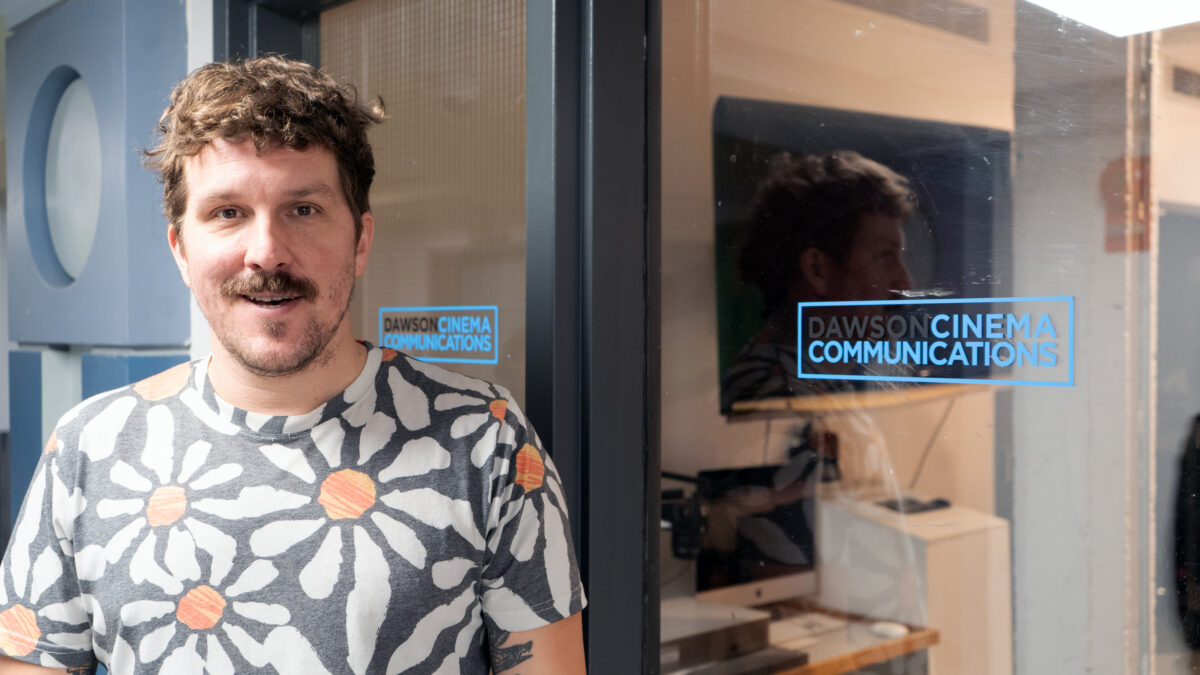
Photo by Michael Filtz, Cinema | Communications faculty member