Dream summer internship for Dawson students who will work on space propulsion and clean energy
This summer, select Dawson College Science students will dive into Canadian Space Agency (CSA) and federal government-funded research at McGill University’s Interstellar Flight Experimental Research Group. The projects tackle fusion stability, laser thermal propulsion for rapid spaceflight, and plasma magnet technologies, bridging theory with hands-on validation alongside industry partners.
“The project is being led by Dr. Andrew Higgins (McGill Engineering) and Dawson student involvement will be coordinated by McGill graduate and undergraduate students, including Dawson Enriched Pure & Applied graduate (2021) Anthony Coté who is currently in his final year of Mechanical Engineering at McGill,” said Chris Whittaker who is the Dawson lead for the project.
“This is an exciting opportunity for seven Dawson students to be awarded paid summer internships (funded in part by Dawson’s CARE Internship Initiative) starting this summer.”
Cutting-edge projects await
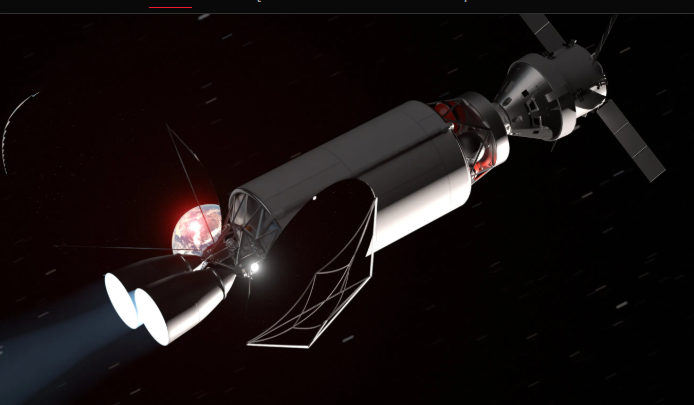
The Imploding Plastic Cylinders project addresses buckling in Magnetized Target Fusion for clean energy. Two Laser Thermal Propulsion (LTP) initiatives develop inflatable laser concentrators to cut spacecraft mass and model a six-month crewed Mars round-trip. A Plasma Magnet Technology Demonstrator tests CubeSat controls via high-altitude balloons, advancing solar wind deflection for propulsion.
These efforts immerse students in CAD, 3D printing, Python/MATLAB coding, high-speed videography, and photonic Doppler velocimetry. Dawson interns will conduct literature reviews, build test apparatuses, optimize mission designs, and validate hardware in space simulation chambers.
Student excitement builds
Current Dawson student Brent Suter, who is student activity coordinator for the project, shared what drew him: “In class, you always discuss the applications of the theory you’re learning, but this opportunity gives us the chance to actually experience firsthand what that’s like. The biggest benefit of course would be to learn from established university students who have undergone many projects of their own.”
Fellow student Amélie Zurawski, eager for the challenge, said: “The moment I heard about this project, I knew I wanted to participate. It was exactly the opportunity I had been hoping for the entire time I was in CEGEP.”
Hailey Racine is another Dawson student who would love to participate. She was “drawn to get involved in this for two reasons. Firstly, I have always been very interested in space, and more recently physics and engineering, so a project like this has been a dream of mine for as long as I can remember.”
Hands-on skills and mentorship
Students anticipate prototyping deployable reflectors for LTP, selecting vacuum-resistant materials under laser flux. Brent noted: “For me, the most interesting part is the possibility of designing and prototyping a deployable reflector for focusing the laser’s energy. This would continue some preliminary work done by Vanier students and seems to be quite hands-on while introducing plenty of valuable skills like CAD.”
McGill students Anthony Côté and Siera Riel described what’s in store: “Dawson students will get to conduct university-level research of various types on topics related to advanced space propulsion and fusion energy,” they said. “Under the close supervision of undergraduate and graduate students of the McGill Interstellar Flight Experimental Research Group, they will take ownership of their own research projects, dabbling in literature review, theoretical modeling, physical prototyping and experimentation, as well as data analysis and visualization.”
Amélie is interested in propulsion: “For me, it’s definitely the propulsion side of things, but I am happy to work on either of the parts. This project focuses on a different kind of propulsion than the typical kind, which is chemical propulsion. Here, laser thermal propulsion is being used.” Hailey agreed: “While all aspects of the project are something I would like to learn more about, I think that the propulsion part of the project is particularly interesting to me because it’s the part I find the most tangible.”
Equity and community impact
Recruitment follows EDIA principles, targeting over half from underrepresented STEM groups (gender, sexual orientation, Indigenous, visible minorities, disability), using NSERC-aligned processes. This fosters an inclusive environment reflective in McGill’s diverse supervisors.
Anthony, a Dawson alumnus, is happy to see students at his old school get this chance: “Five years ago, I would not have hesitated at the chance of becoming involved in meaningful research at McGill in space propulsion and clean energy before even entering university, and so I am excited to provide Dawson students with this opportunity.”
Siera and Anthony hope interns gain passion and skills: “We hope that Dawson students will not only gain skills and experience valuable to their undergraduate STEM education, as well as future research and internship opportunities, but also cultivate a passion for science and engineering.”
Stepping stone
No interns have been selected yet, but some Dawson students have already had a chance to visit the McGill labs. “Overall, this project could provide a stepping stone to future work in the field by offering invaluable experience as well as simply having a great time by working with like-minded individuals over the summer,” Brent said.
Amélie is hoping to get a spot: “This experience would provide me with technical and hands-on skills that will allow me to complete more difficult projects and join more advanced groups and be a genuinely integral part of the team.” Hailey hopes that “this experience will serve as a starting point for my academic and career goals, giving me a place to start and build from.”
Lab visits fueled enthusiasm. “From visiting the McGill labs, I learned about the different equipment they have and who can operate them… They seemed very welcoming and knowledgeable,” Amélie said.
Hailey “learned about not only this project specifically, but university research in general… Of course I have also learnt a lot about laser propulsion as well, and what sort of challenges it poses.”
“We were already fortunate enough to visit the McGill labs and being able to witness the working prototypes and layouts for experiments firsthand I think stirred a lot of excitement among the students,” Brent said.
The McGill mentors addressed the challenges: “Advanced space propulsion and fusion energy are challenging fields of active research. They both rely on intrinsically multidisciplinary efforts… Creativity and persistence in the face of obstacles are thus necessary.” They “look forward to working with the brilliant students who will join us in the summer!”