Faculty Learning Community Spotlight: Beyond The Echo Chamber
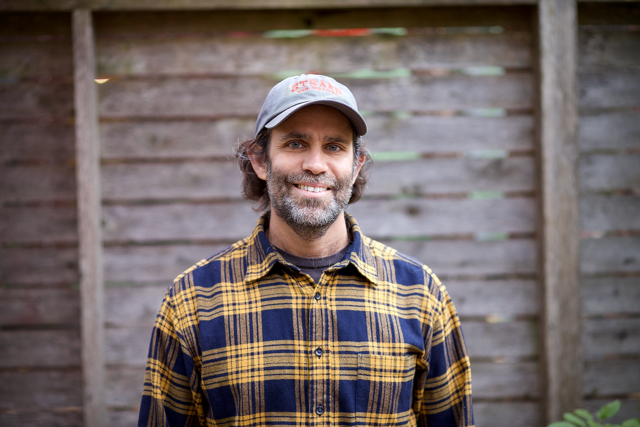
Below is an interview with Michael Filtz (Cinema | Communications), facilitator of “Beyond the Echo Chamber: Tools for Teaching Journalism and Media Literacy,” a Faculty Learning Community (FLC) taking place over the 2025-26 year at Dawson College.
Faculty Learning Communities are currently accepting proposals for Facilitators for 2026-27. Please learn more and apply, see the Faculty Learning Community web page or reach out to FLC@dawsoncollege.qc.ca. We’re also hosting an information session on the morning of PED Day on November 7. The deadline to apply is November 14.
What can your FLC give participants that a workshop can’t achieve? What is unique or interesting about it?
Michael Filtz: Before I started teaching, I helped build and run media- and journalism-oriented startups, so I’m naturally drawn to collaborative problem-solving. That mindset carried into my teaching, but I quickly realized how easy it can be to feel siloed within a single department. It’s difficult to collaborate across those boundaries — to reach beyond our own routines. The FLC offers a way out of that. Because it unfolds over two semesters, it gives participants the time and space to connect meaningfully across disciplines and let ideas develop gradually, rather than in a single burst like what often happens in a workshop. The exchange of perspectives is ongoing. In the context of media literacy — one of the most urgent concerns among many faculty — that kind of sustained, interdisciplinary dialogue feels absolutely essential. Our group includes pedagogical counsellors, a representative from the library, teachers from ALC, the sciences, professional photography, and the French department, as well as recent graduates of Dawson programs. Those diverse lenses — from student life to professional practice — push all of us to reconsider what journalism and media literacy really mean in the classroom today, and how we can help students engage with them in deeper, more relevant ways.
Briefly describe what a typical get-together looks like.
MF: We meet in person, which I find makes a genuine difference. Our last session kicked off with the question: “How can we help students care about the media?” Everyone jumped in — some drew from what’s happening in their classes, others shared stories from outside teaching, and a few brought external resources they’d found. As we talked, we collaboratively developed a list of tools we could all use and resources to revisit later and eventually become ways that students can more critically connect with “the media.” By the end, we had a modest but solid “take-home” list: resources, ideas, and other concrete assets to delve into further and eventually turn into actionable plans. It’s collaborative, informal, creative. The magic happens when someone surfaces something I’d missed or frames a problem I’ve been grappling with — and suddenly the conversation arcs in a new direction.
Can you describe one illuminating moment or edifying experience from your first meeting?
MF: At the very first meeting, one thing struck me: the recent graduates in our group — former editors of The Plant — brought an energy and perspective I hadn’t anticipated. They described what they learned in class, yes, but more strikingly, what they explored outside class — how they covered stories, debated ethics, organized workflow, questioned media sources. It made me realize that, as someone who teaches journalism, there are blind spots in my own curriculum. Here were motivated students, eager and forward-thinking, doing media-literacy work that hasn’t always been explicitly built into my courses. Hearing them talk about how they applied class learning, how they extended it, and how they’re already reframing it at university has been genuinely energizing. Teaching isn’t just about delivering content; it’s about opening a space where students feel invited to take initiative and carry something forward.