Learning to work together before it matters most
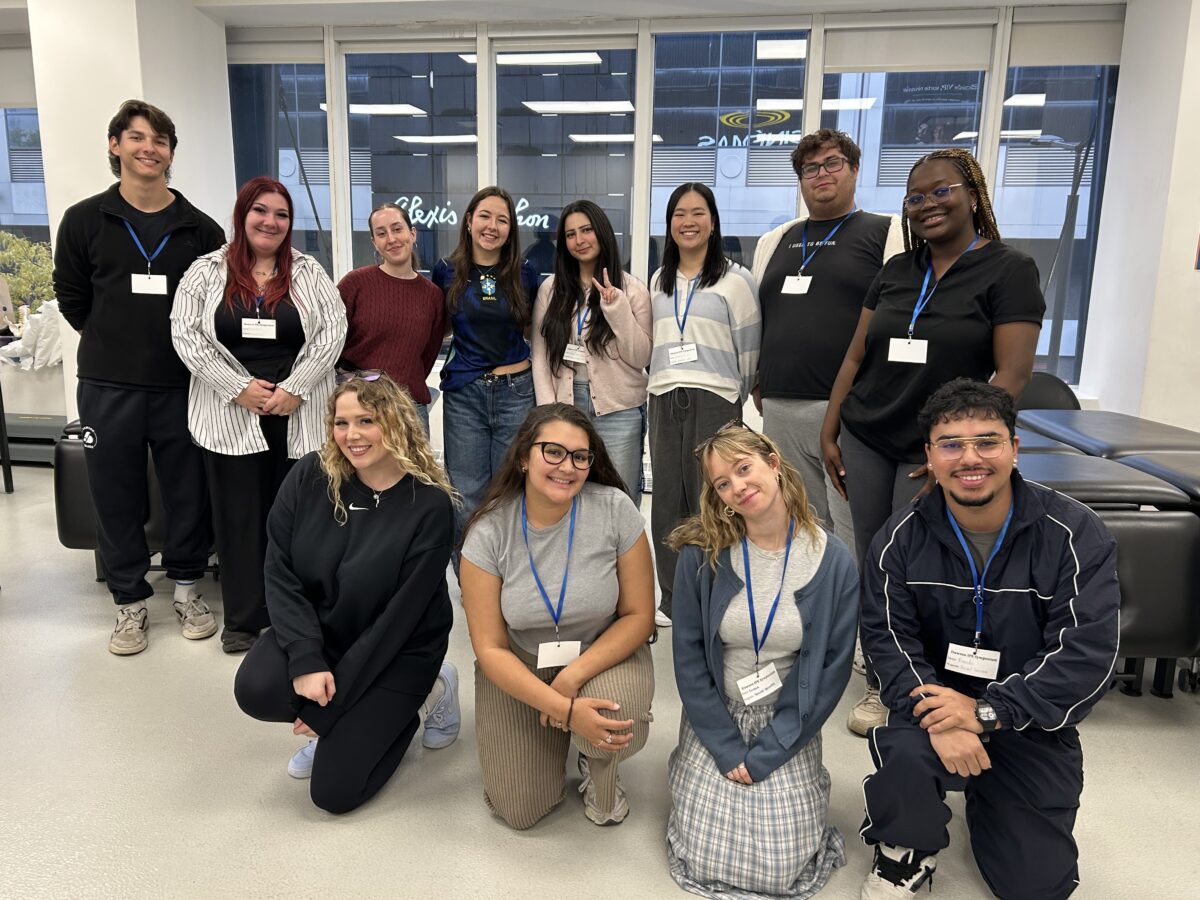
When a patient enters the healthcare system, they may interact with nurses, physiotherapy technologists, social service workers, diagnostic imaging technologists, laboratory professionals and many others. At Dawson’s Interprofessional Education (IPE) Symposium on Oct. 16, students from seven health and social service programs had the chance to experience what effective collaboration looks like before they enter the workforce.
Third-year students in Nursing, Physiotherapy Technology, Social Service, Biomedical Laboratory Technology, Diagnostic Imaging Technology, Medical Ultrasound and Radiation Oncology participated in the annual event, which helps future professionals develop the communication, critical thinking, problem-solving, teamwork and leadership skills needed to provide patient-centred care.
This year’s IPE Symposium featured a professionally acted scenario in two parts performed by graduates of Dawson’s Professional Theatre (Acting) program. Part One focused on workplace conflict and dysfunctional team dynamics and Part 2 focused on team communication and conflict resolution. The students also viewed a video that presented the fictitious healthcare journey of a patient named Jean-Louis. After watching the live and video performances, students met in interdisciplinary groups to discuss challenges, perspectives and possible solutions.
A common theme emerged from nearly every conversation: no one profession can do it alone.
Emily, a Nursing student, said the experience reinforced that while healthcare professionals bring different expertise, “we all have a common goal and that’s our patient’s well-being and best interest.”
For Estella-Rose, a Social Service student, one of the most important lessons was recognizing that different professions often see different pieces of the same situation.
“All professions see the world differently,” she said. “Someone might see different issues that another professional might not.”
Many students spoke about the importance of communication. Heidi, a Nursing student, called it “the most important thing when caring for patients, as well as working together.”
Ernesto, a Social Service student, noted that when professionals fail to communicate, critical information can be missed.
“If our fields do not communicate we might miss things, and some important information might fall through the gaps,” he said.
The discussions also gave students a clearer understanding of their own future roles.
Emily said hearing from students in other programs highlighted the reality of modern healthcare.
“In real life we need these multidisciplinary teams to work together,” she said. “There is no hierarchy of one profession being more important than the other because in the end we need each other to provide the best care for our patients.”
For Social Service student Eboutou Louise, the conversations illustrated how healthcare extends beyond a diagnosis.
“It’s not just about the medical,” she said. “You have to consider the surroundings, the person, everything.”
Advocacy emerged as another important theme. Estella-Rose reflected on the patient case and said that keeping the client’s needs at the centre is essential.
“Always thinking of the client and what would be best for them could be very helpful for the patient,” she said.
Luana, also a Social Service student, was struck by the role every professional can play in speaking up for patients.
“We emphasized the importance of advocacy no matter your discipline as we may be the patient’s voice if they cannot advocate for themselves,” she said.
Students also gained a deeper appreciation for the contributions of their future colleagues. Morena, a Nursing student, said the experience was a reminder that patient care is a collective effort.
“Working together allows us to see the patient as a whole person rather than just focusing on their diagnosis,” she said.
Looking ahead to their careers, many students said the experience provided lessons they will carry with them long after graduation.
Merna, a Physiotherapy Technology student, said she learned the importance of remaining open-minded and ensuring patients feel heard.
“As a future Physiotherapy Technologist, I want to make sure my patients feel heard, that their concerns are respected and that I am able to work with other healthcare professionals to find the best ways to support them,” she said.
Morena said she hopes to be “approachable, open-minded, and willing to learn from others,” while Emily emphasized “the importance of clear communication and treating every member of the healthcare team with respect.”
For Ernesto, one lesson stood out above all. “Building a good relationship with people you might work with may make it easier to do our jobs in the future,” he said.
By bringing future healthcare and social service professionals together to learn from one another, IPE Symposium gave students a glimpse of the collaborative environments they will soon join. More importantly, it reinforced a lesson at the heart of patient-centred care: the best outcomes happen when professionals work together.
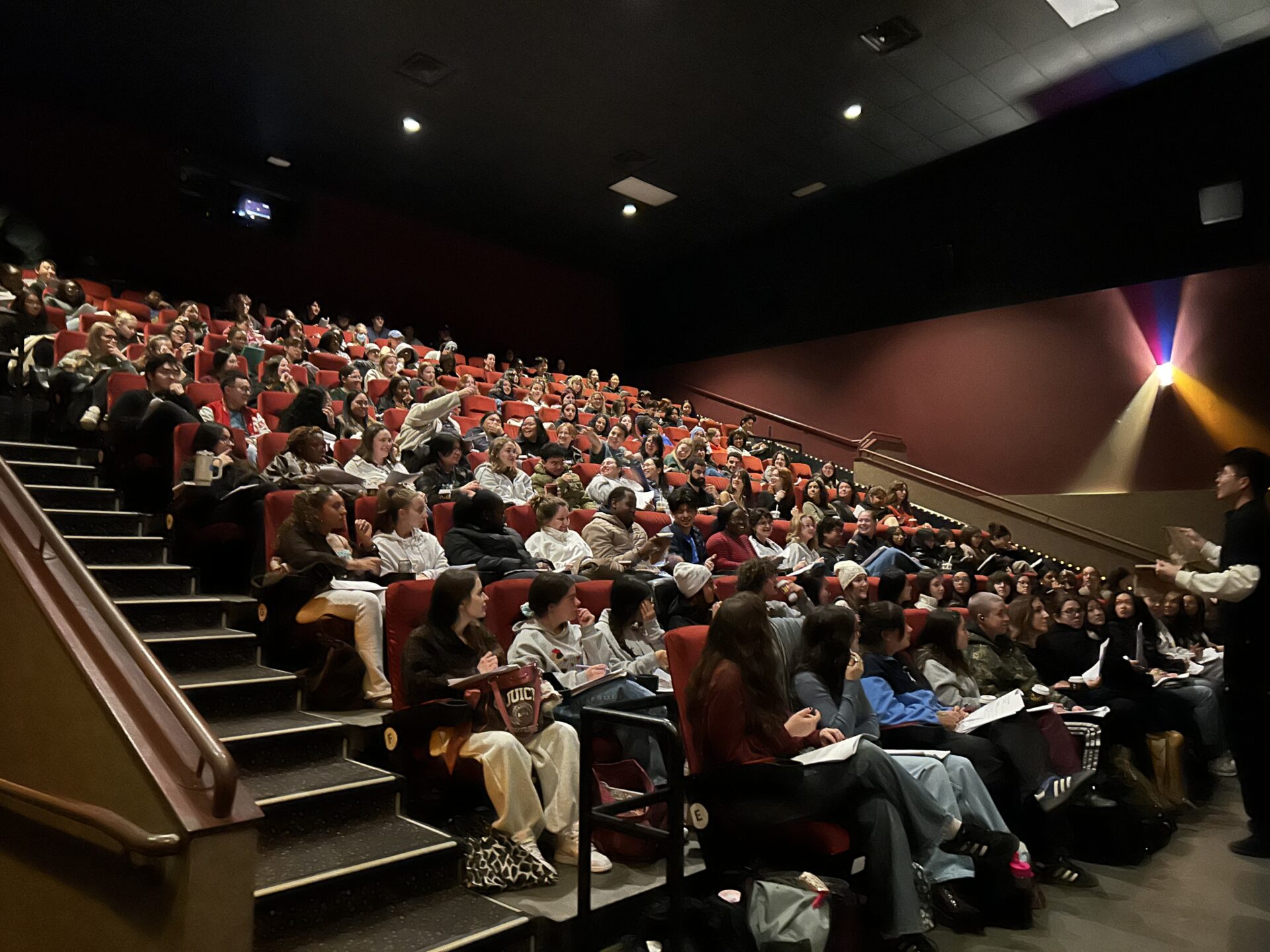
Photo: Third-year students in Dawson’s medical and social service programs at IPE Symposium Day watching an interactive scenario, which they discussed afterwards to learn more about working with multidisciplinary teams.
The Interprofessional Education Symposium is partially funded through the Dawson College Foundation’s SAGE initiative. Find out more about SAGE here.