Courses: Anatomy 1 (144-111-DW) + Biology 1 (101-941-DW)
Eligible students: 1st semester Physiotherapy Technologies
Teachers: Hasler + Calve
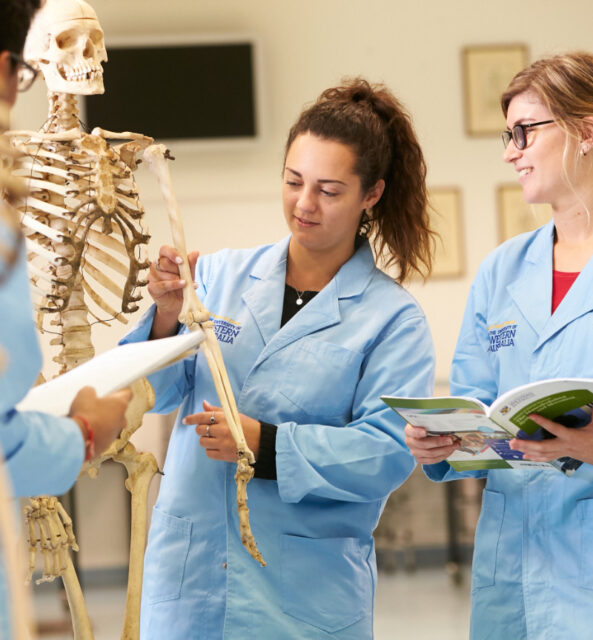 Integrated Anatomy 1 and Biology 1. Case-based approach. Required courses for first-semester Physiotherapy students. Understanding the human body not only from an anatomical perspective, but also a biological one, is of utmost importance for future health care practitioners. Biology I and Anatomy I are two integral, foundation courses that introduce students to the human body. Biology I has a focus inherent to the systems of the human body down to their microscopic level of structure, function and organization. Anatomy I focuses more at the macroscopic levels of structure, function and organization. These complementary perspectives and the synchronized curriculum will provide learners with a holistic and integrative view of the human body and its systems (e.g. musculoskeletal, nervous, circulatory, etc.) The integration of these two courses will enhance students’ knowledge by contextualizing the importance of the structure and function of the human body. This will provide the strong foundation required for future courses in the program and their career as a Physiotherapist Technologist.
For more information about this LC, contact the Physiotherapy Technologies program coordinator.
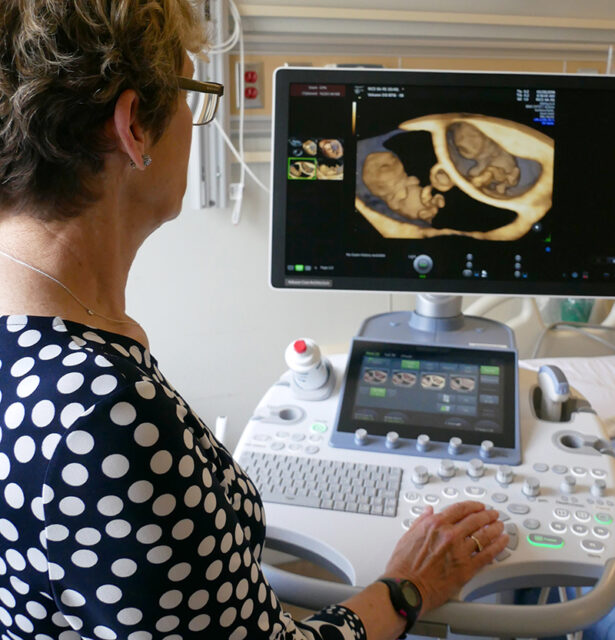 Integrated team-taught pairing for first-semester Ultrasound Technologies students focused on understanding and applying Physics in the use of Ultrasound apparatus. These two courses will be tightly integrated and will introduce and reinforce complementary concepts and applications.
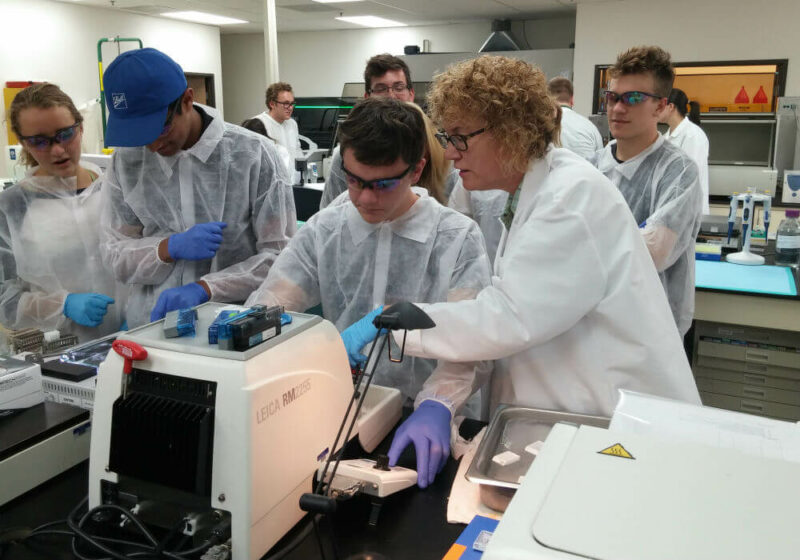 Peer-to-peer mentoring and integrative lab projects for first-semester and third-semester Analytical Laboratory Technologies students.
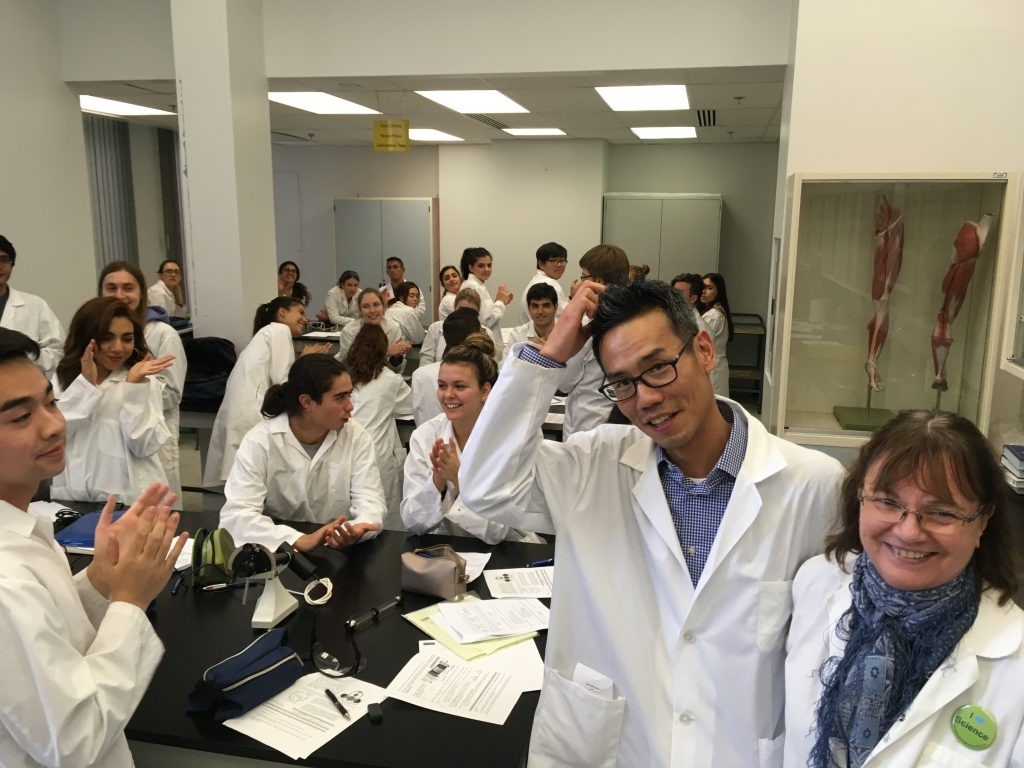 Team-taught integration of 3rd semester Science courses Biology II and Organic Chemistry. Students learn how Chemistry functions as the alphabet of the language of Biology. The paired course offers collaborative opportunities to understand the functions of organic molecules in the cells and in physiological systems. An integrative laboratory activity exemplifies the role of enantiomers in the nervous system. Only available to third-semester Enriched Pure and Applied Science students.
![IMG_2976[1]](https://www.dawsoncollege.qc.ca/learning-communities/wp-content/uploads/sites/189/IMG_29761.jpg) Team-taught integration of two first-term Science requirements, Calculus I and Mechanics. Examples taken from mechanics are used to provide context and alternative points of view on differential calculus. Inversely, the mathematical tools acquired in math are reinvested in mechanics to strengthen links between variables, explore more authentic problems, and offer alternative approaches to problem solving. Available only to first-semester Enriched Pure and Applied Science students.
Team-taught integration of two first-term Science requirements, Calculus I and Mechanics. Examples taken from mechanics are used to provide context and alternative points of view on differential calculus. Inversely, the mathematical tools acquired in math are reinvested in mechanics to strengthen links between variables, explore more authentic problems, and offer alternative approaches to problem solving. Available only to first-semester Enriched Pure and Applied Science students.